Experience / PT Bakrie Pipe Industries
PT Bakrie Pipe Industries
Maintenance Division Intern
- DATES
- 13 January — 28 February 2025
- LOCATION
- Bekasi, Indonesia
- SETTING
- Operating steel-pipe plant
- UNIVERSITY DELIVERABLE
- Kerja Praktik report and seminar
Seven weeks in the Maintenance Division of a working steel-pipe plant. Most of my time was spent on the production floor with the maintenance crew, helping with mechanical maintenance and repairs on operating production equipment.
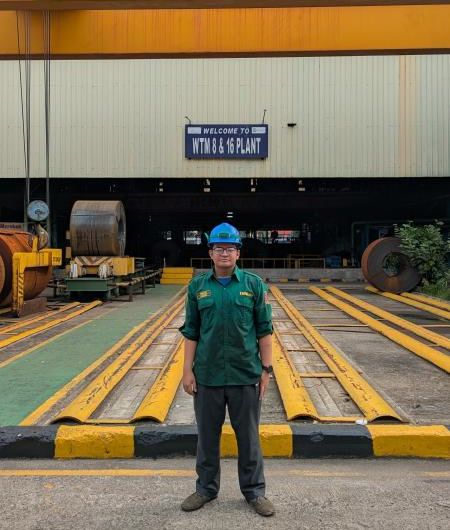
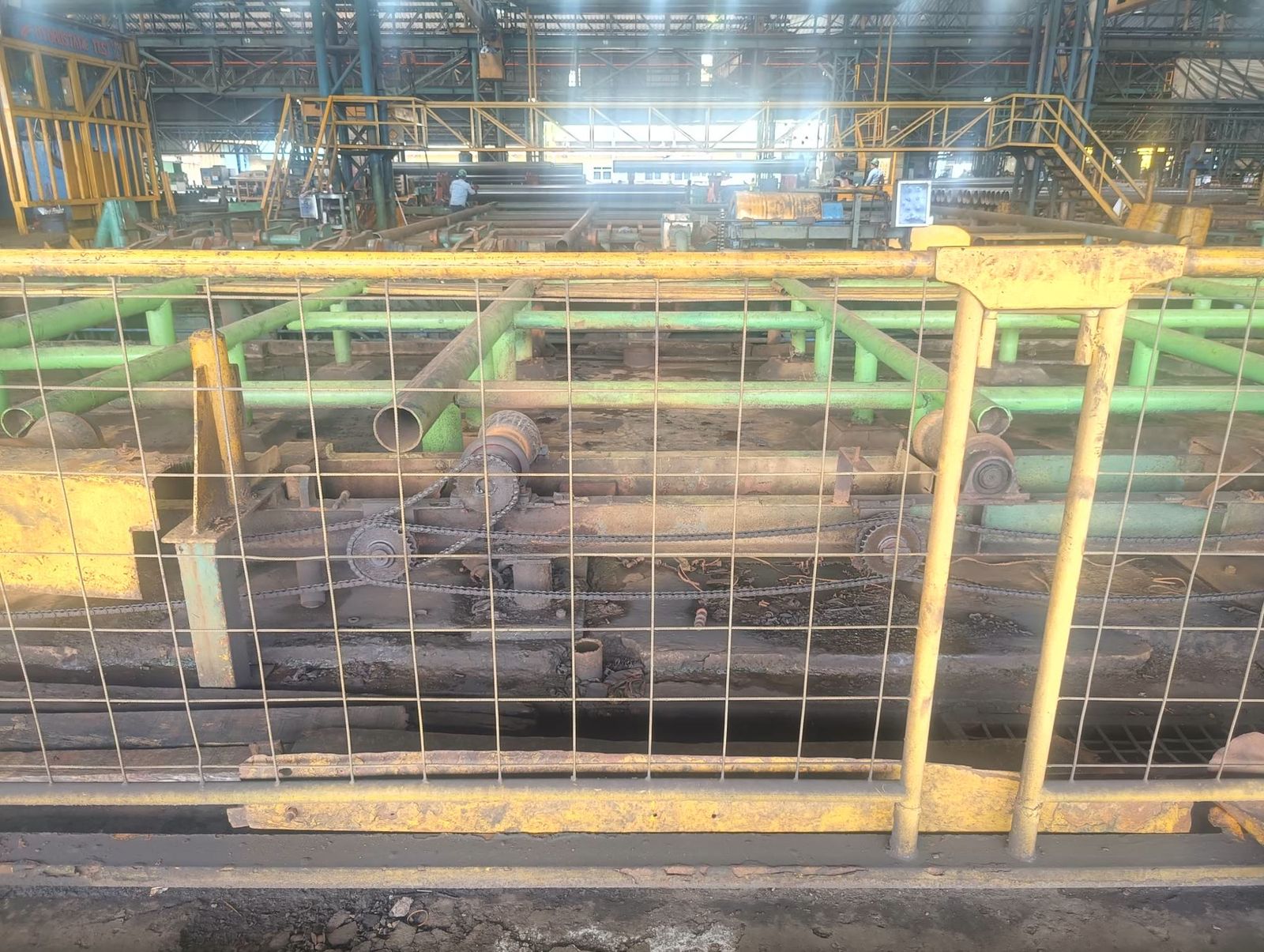
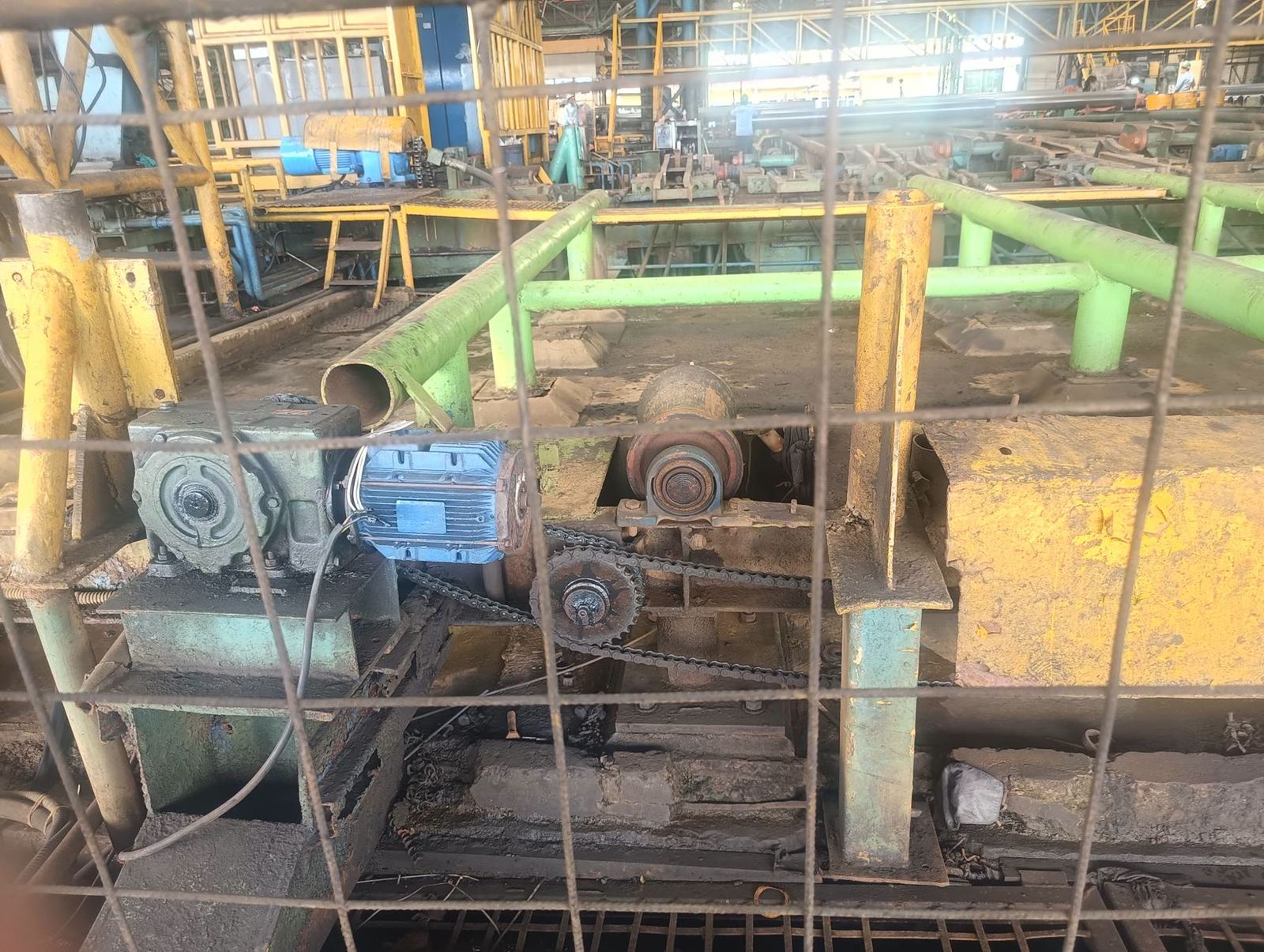
ON THE FLOOR
Hands-on maintenance
I worked alongside the maintenance crew, helping with mechanical maintenance and repairs and handling tools and components around heavy machinery. It was my first close look at how mechanical problems show up on real equipment, outside the classroom.
ONE JOB THAT STUCK WITH ME
Taking apart a heavy gearbox with the crew. It was hand tools and a lot of hammer work, with a crane to move the heavy components. The technicians led the job and the lifting; I worked alongside them.
FEATURED TECHNICAL ASSIGNMENT · KERJA PRAKTIK
Investigating a recurring drive-chain failure
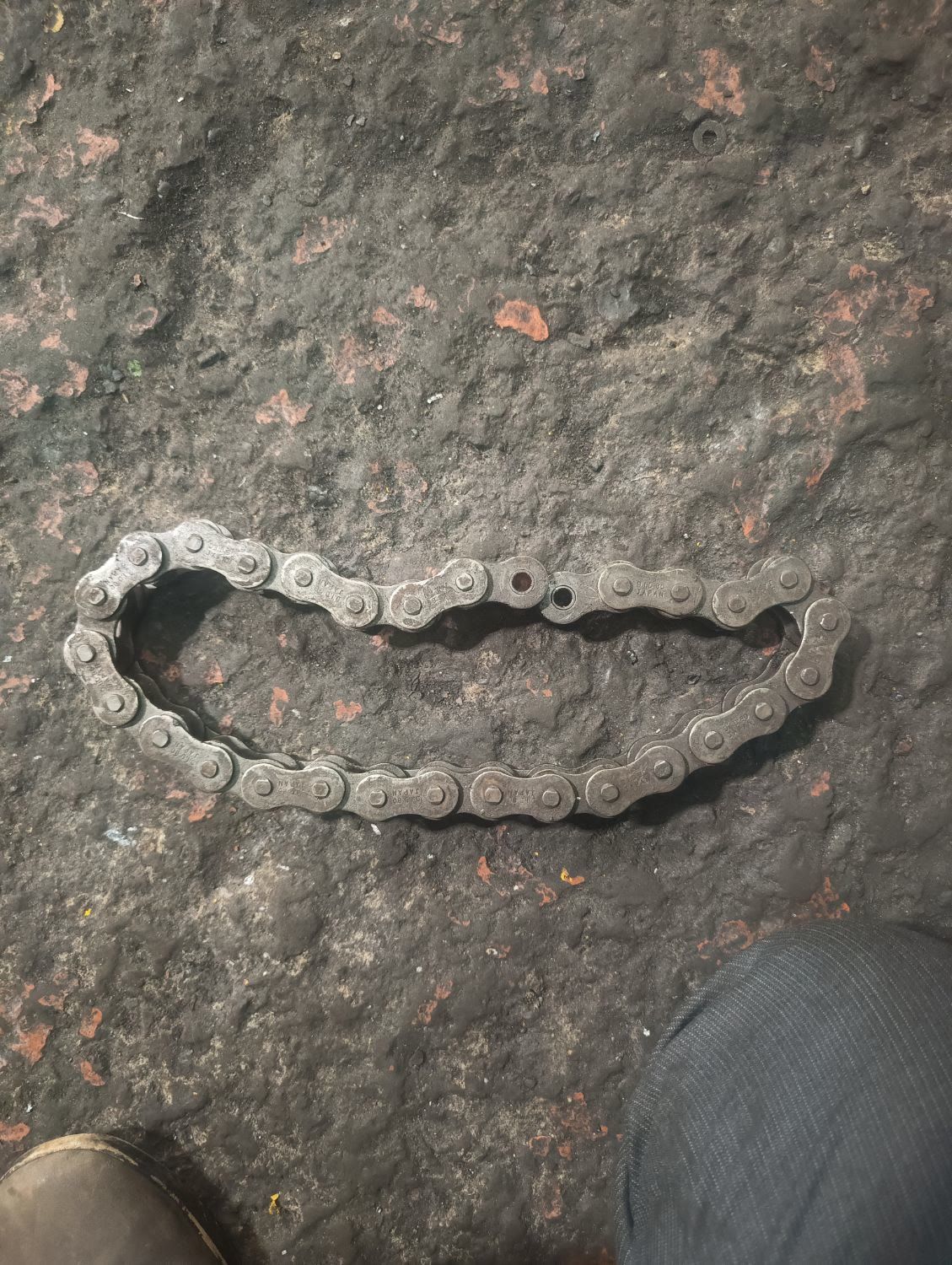
My university Kerja Praktik also required a technical study, written up as a report and presented at a seminar. I took on a problem from the line: the roller-chain drive on a pipe conveyor kept breaking in operation, disrupting production. I wanted to work out whether the chain itself was the problem or the conditions it was running in.
- CHAIN
- RS60 roller chain
- DRIVE
- 2.2 kW motor, 1:1 sprockets
- DUTY
- Two 8-hour shifts a day
- 01Inspect and measureVisual inspection and manual measurements of the chain and sprockets, checked against the line’s technical drawings.
- 02Define the operating conditionsHeavy shock loading from the steel pipe, periodic lubrication and 16 hours of running a day.
- 03CalculateChain speed and length, working load against breaking load, the service factor, and the power the chain can carry under those conditions.
- 04Compare lubrication methodsRecalculate with drip and oil-bath lubrication in place of the current periodic lubrication.
What the analysis pointed to
On paper, the chain was strong enough: its breaking load left a large safety margin over the working load. The weak point in the calculation was its service conditions. Shock loads, periodic lubrication and long running hours pushed the service factor up, and with it the chain’s rated power capacity fell below the motor’s output.
That made lubrication and operating conditions the likely contributing factors, rather than an undersized chain. A calculation like this points to probable causes; it can’t confirm the physical failure mechanism on its own.
What I recommended
- 01Switch to continuous lubrication: an oil bath, with drip lubrication as the alternative.
- 02If neither is practical, lubricate the chain manually on a fixed routine.
- 03Monitor and maintain the drive regularly so wear is caught before the chain breaks.
Recommendations from my report and seminar. I don’t know whether they were adopted after my internship.
What I took from it
Working on the floor showed me how physical maintenance work is: heavy components, hand tools, and machinery that belongs to a running plant. The chain study connected that to my machine-elements courses. The formulas were the ones I already knew, but the real operating conditions decided the answer.
Photos are my own, taken on the plant floor. Technical drawings and internal documents aren’t reproduced here.